

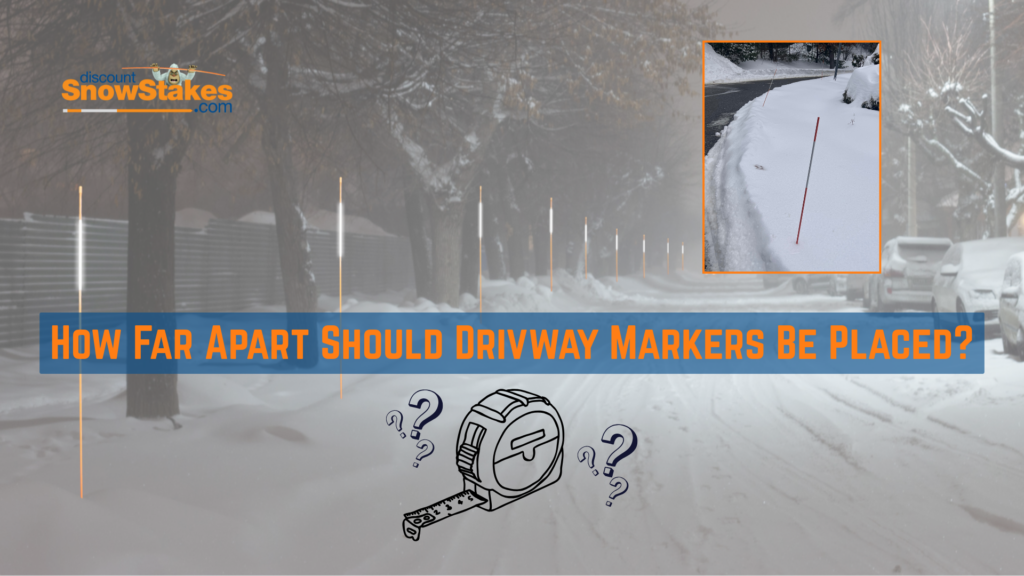
If you’re preparing for winter, one of the most common questions homeowners and snow removal professionals ask is, “How far apart should driveway markers be?”
The answer depends on the shape of your driveway and the amount of snowfall your area receives. In most cases, driveway markers should be placed every 8 to 12 feet along straight sections of a driveway. For curved driveways, narrow entrances, or areas with hidden hazards, spacing should be reduced to 5 to 8 feet for better visibility.
Just as important as spacing is how far the markers are placed from the edge of the driveway. Installing them too close can result in broken markers, while placing them too far away can make it difficult for plow operators to judge the actual edge of the pavement.
Proper placement helps protect your property, improve snow removal accuracy, and reduce costly damage throughout the winter.
Quick Answer: How Far Apart Should Driveway Markers Be?
For most residential driveways:
- Straight driveways: Every 8 to 12 feet
- Curves and turns: Every 5 to 8 feet
- Commercial entrances: Every 8 to 10 feet
- Areas with hazards: Add extra markers as needed
Driveway markers should also be installed 2 to 6 inches off the edge of the driveway or roadway, depending on the width of the shoulder and surrounding landscaping.
Why Proper Driveway Marker Spacing Matters
Driveway markers are designed to give snow plow operators a clear visual guide when snow covers the pavement.
Without proper spacing, it becomes much more difficult to identify:
- Driveway edges
- Curves
- Sidewalks
- Retaining walls
- Landscaping
- Culverts
- Mailboxes
- Fire hydrants
Correctly spaced markers help create a smooth visual path that allows operators to plow confidently, even during heavy snowfall or low-light conditions.
How Far Apart Should Driveway Markers Be?
Straight Driveways
For long, straight driveways, place markers every 8 to 12 feet.
This spacing provides excellent visibility while keeping installation time and material costs reasonable.
Curved Driveways
Curves require additional guidance.
Reduce spacing to approximately 5 to 8 feet so the curve remains clearly visible beneath deep snow.
The tighter the curve, the more markers you should install.
Commercial Properties
Parking lots, entrances, and loading areas often benefit from spacing of 8 to 10 feet, especially where large plow trucks operate.
Additional markers should be installed around islands, curbs, sidewalks, as well as pedestrian crossings.
How Far Should Driveway Markers Be from the Plow Path?
This is one of the most overlooked parts of installing driveway markers.
Driveway markers should not be installed directly on the edge of the pavement where a snow plow blade will make contact.
Instead, install them approximately 2 to 6 inches outside the edge of the driveway or roadway.
This small offset provides two important benefits:
- It accurately identifies the edge of the pavement.
- It helps reduce the chances of the plow blade striking the marker during normal snow removal.
If your driveway has gravel shoulders, decorative landscaping, or soft edges, you may want to position the markers slightly farther away while still clearly defining the plow path.
The goal is to give the snow removal operator a clear reference without placing the marker directly in the blade’s path.
Mark Hazards with Additional Driveway Markers
Driveway markers aren’t just for marking pavement.
Install extra markers around:
- Landscape boulders
- Decorative retaining walls
- Garden beds
- Drainage ditches
- Culverts
- Utility boxes
- Mailboxes
- Fire hydrants
Adding a few extra markers can prevent hundreds or even thousands of dollars in repair costs.
Why Fiberglass Driveway Markers Are the Best Choice
Not all driveway markers perform the same.
Many professionals prefer fiberglass driveway markers because they are:
Highly Visible
Bright colors and reflective tape make them easy to see during snowstorms and at night.
Flexible
Fiberglass bends when contacted instead of snapping like wood.
Weather Resistant
They won’t rust, rot, or absorb moisture, making them ideal for harsh winter conditions.
Long Lasting
Quality fiberglass markers can often be reused for multiple seasons, reducing replacement costs.
Tips for Installing Driveway Markers
Follow these best practices for the best results:
- Install markers before the ground freezes.
- Use bright, highly visible colors such as orange, yellow, or lime green.
- Choose reflective markers for improved nighttime visibility.
- Leave enough marker above ground to remain visible after heavy snowfall.
- Walk your driveway after installation to ensure all edges and hazards are clearly marked.
Taking a little extra time during installation can make snow removal much easier throughout the season.
Protect Your Property This Winter
Proper driveway marker placement is one of the simplest ways to improve winter safety and prevent property damage.
By spacing markers every 8 to 12 feet on straight sections, reducing spacing on curves, and positioning them 2 to 6 inches outside the edge of the plow path, you’ll create a clear guide that helps snow removal crews work safely and efficiently.
Whether you’re a homeowner protecting your driveway or a contractor preparing multiple commercial properties, investing in quality fiberglass driveway markers from Discount Snow Stakes and installing them correctly will pay off every winter.
| Driveway Type | Recommended Marker Spacing |
|---|---|
| Straight Driveway | 8 to 12 feet |
| Curved Driveway | 5 to 8 feet |
| Commercial Entrance | 8 to 10 feet |
| Around Hazards | As needed for full visibility |