

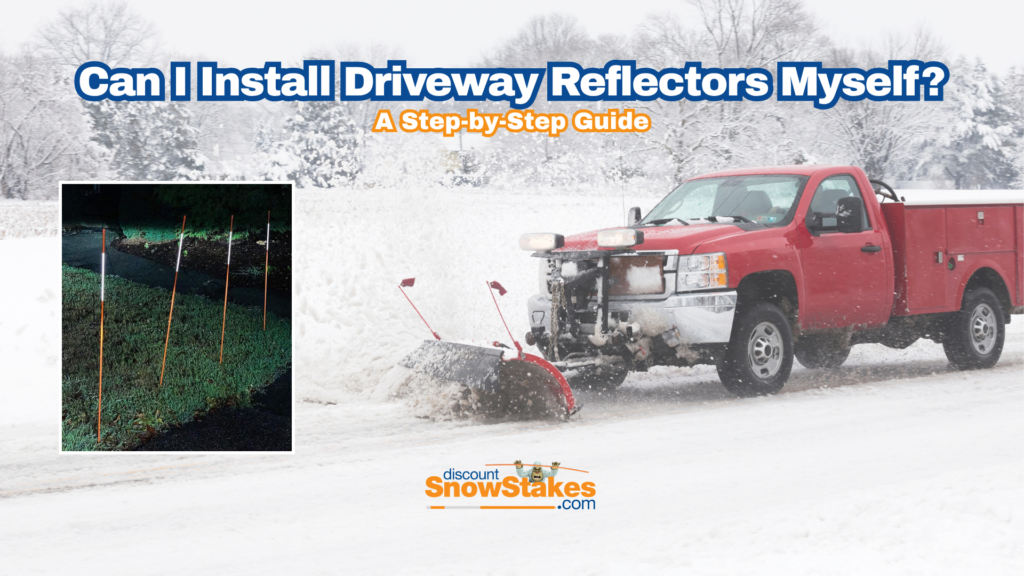
If you’re wondering, “Can I install driveway reflectors myself?”, the answer is yes, in most cases, you can install driveway reflectors or reflective driveway markers yourself without hiring a professional.
For driveway markers and fiberglass snow stakes, installation is usually a straightforward process. The key is choosing the right location, spacing the markers properly, and installing them before the ground becomes frozen.
Reflective driveway markers can help homeowners, property managers, and snow removal professionals clearly identify the edges of a driveway during rain, darkness, and winter storms. They are especially useful once snow begins covering the pavement, lawn edges, curbs, and landscaping.
Quick Answer: Can You Install Driveway Reflectors Yourself?
Yes. Most homeowners can install driveway reflectors themselves by placing the markers along the edge of the driveway before the ground freezes. For straight driveways, markers are generally spaced about 8 to 12 feet apart. Curves, entrances, and hazards may require closer spacing. Markers should be positioned just outside the area where the snow plow blade will travel while still clearly identifying the edge of the driveway.
The installation process may vary depending on the type of driveway reflector you choose. Fiberglass or plastic stakes are typically easier to install than permanent pavement reflectors that may require drilling, adhesive, or other specialized installation methods.
What Type of Driveway Reflector Are You Installing?
Before starting, it’s important to understand that not all driveway reflectors are installed the same way.
Reflective Snow Stakes and Driveway Markers
Fiberglass and plastic driveway markers are designed to be installed directly into the ground.
These are often the easiest type for homeowners to install because they do not require permanent modifications to the driveway surface.
At Discount Snow Stakes, our PRO Line fiberglass stakes are designed with pointed tips to help simplify installation. Their reflective tape also helps improve visibility when illuminated by vehicle headlights.
Permanent Pavement Reflectors
Some driveway reflectors are attached directly to asphalt or concrete. Depending on the product, these may require:
- Drilling
- Surface preparation
- Adhesive
- Anchors
- Specialized installation tools
Before installing permanent reflectors, always follow the manufacturer’s instructions and consider whether the installation could affect your driveway surface.
For most homeowners looking for a simple seasonal solution, reflective driveway stakes are often the easier option.
How to Install Driveway Reflectors Yourself
Installing driveway markers can usually be completed in a few simple steps.
Step 1: Install Before the Ground Freezes
The best time to install driveway reflectors that use ground stakes is before the ground becomes frozen.
Waiting until winter can make it difficult or impossible to push stakes into the soil.
Installing early also gives you time to make adjustments before the first snowstorm.
Step 2: Walk the Driveway and Identify the Edges
Before installing anything, walk the entire driveway.
Look for areas that may become difficult to see after snow accumulates.
Pay close attention to:
- Driveway edges
- Curves
- Entrances
- Narrow sections
- Retaining walls
- Garden beds
- Large rocks
- Culverts
- Drainage ditches
- Mailboxes
- Utility boxes
These areas may need additional markers for improved visibility.
Step 3: Measure Your Spacing
For most straight residential driveways, place markers approximately 8 to 12 feet apart.
For curves and turns, reduce the spacing to approximately 5 to 8 feet so the driveway’s shape remains easy to follow.
If visibility is poor because of trees, slopes, or other obstacles, add additional markers where needed.
The goal is to create a clear visual path from the beginning to the end of the driveway.
Step 4: Position Markers Outside the Plow Path
A common installation mistake is placing driveway markers directly where a snow plow blade will travel.
Instead, place the marker just outside the edge of the pavement or the normal plow path.
This helps the marker show the operator where the driveway ends while reducing the chance of direct contact with the plow.
A small offset of approximately 2 to 6 inches outside the driveway edge is often enough to clearly mark the boundary.
Always consider the shape of the property and the way snow removal equipment will travel when determining the final position.
Step 5: Insert the Marker Carefully
For pointed fiberglass or plastic stakes, position the stake vertically and press it into the ground.
Avoid forcing a stake through extremely hard ground or striking it aggressively with a tool, as this may damage the stake or cause injury.
If the soil is very compacted, follow the manufacturer’s recommendations for preparing the installation area.
The marker should be secure enough to remain upright but should still leave enough height above ground to stay visible after snow accumulates.
How Tall Should Driveway Reflectors Be?
The right height depends on local snowfall and the size of your snowbanks.
Discount Snow Stakes offers driveway markers in:
- 4-foot lengths
- 5-foot lengths
- 6-foot lengths
- 8-foot lengths
A 4-foot marker may work well in areas with lighter snowfall. Five- and 6-foot markers provide additional visibility in moderate to heavy snow, while 8-foot markers are useful in areas where deep snowbanks or drifting could hide shorter stakes.
When choosing a height, think about how much snow is expected and how high plowed snow typically accumulates along the driveway.
Why Install Driveway Reflectors Yourself?
DIY installation gives you more control over how your property is marked.
You can identify hazards, adjust spacing around curves, and place additional markers in areas where a standard layout may not provide enough visibility.
Installing markers yourself can also help you prepare your property before winter arrives without waiting for a contractor.
For snow removal professionals, installing driveway markers before the season begins can be an important part of preparing customer properties and reducing the risk of accidental damage.
Choose Highly Visible Reflective Markers
Reflective tape can make driveway markers easier to see during nighttime snow removal.
When headlights shine toward the reflective surface, the marker becomes more visible to drivers and plow operators.
For the best results, consider a combination of:
- Bright marker colors
- Reflective tape
- Proper spacing
- Extra markers around hazards
- A height appropriate for your local snowfall
Visibility is particularly important during heavy snow, early morning service, and nighttime operations.
Final Answer: Can I Install Driveway Reflectors Myself?
Yes, you can usually install driveway reflectors yourself, especially ground-installed reflective stakes and driveway markers. Install them before the ground freezes, place them about 8 to 12 feet apart on straight sections, use closer spacing on curves, and position them just outside the normal plow path. Choose a highly visible marker with reflective features and enough height to remain visible above expected snow and snowbanks.
With a little planning and proper placement, installing driveway markers yourself can be a simple and effective way to improve visibility and help protect your driveway, landscaping, and other property features throughout the winter.