

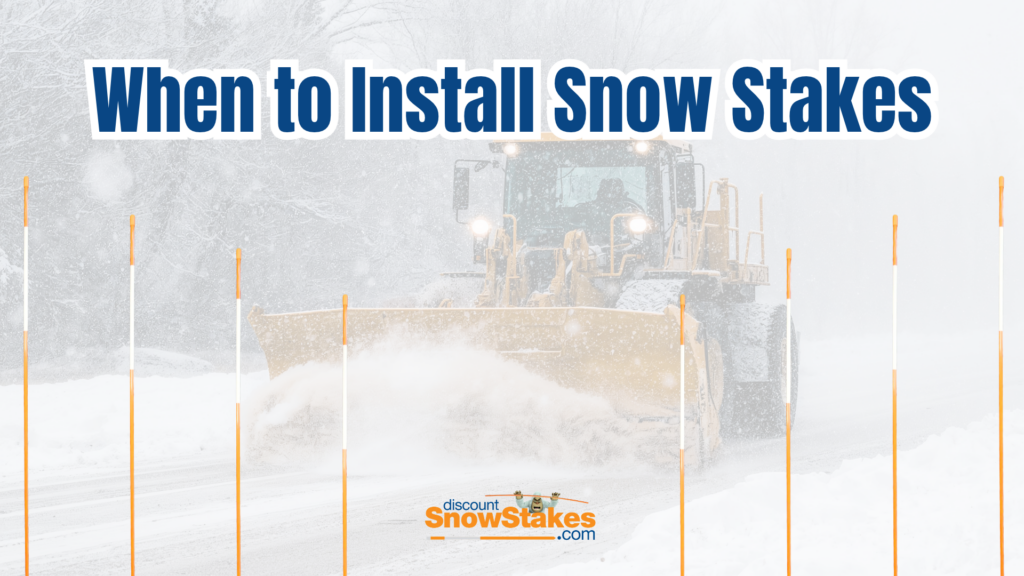
If you’re preparing your property for winter, one question is worth asking before temperatures drop: when should you install snow stakes?
The best time to install snow stakes is in the fall, before the ground freezes and before the first significant snowfall. Installing driveway markers early makes placement easier and ensures your driveway edges, landscaping, curbs, and other obstacles are marked before snow covers them.
For many areas with cold winters, September and October are good months to start planning. In colder regions, you may need to install your stakes earlier. In milder climates, the installation window may extend later into the fall.
The most important factor is not the calendar. It’s the condition of the ground and how soon winter weather is expected.
Why Should You Install Snow Stakes Before Winter?
Snow can make familiar properties difficult to navigate.
Once a driveway is covered, the boundary between pavement and lawn may disappear. Curbs, garden beds, drainage ditches, and other obstacles can become hidden beneath snowbanks.
Snow stakes, also called driveway markers or snow plow stakes, provide a visible guide for homeowners and snow removal operators.
Installing them before winter can help you:
- Mark driveway edges and entrances
- Protect lawns and landscaping
- Identify curbs and pavement boundaries
- Mark hidden hazards and obstacles
- Help snowplow operators navigate properties
- Improve visibility during nighttime snow removal
For commercial snow removal contractors, installing stakes before the season also provides time to mark multiple customer properties without rushing before a storm.
What Month Should You Install Snow Stakes?
The ideal month depends on your location, average frost timing, and expected snowfall.
Here is a general guide:
- September: A good time to plan, inspect properties, and begin early installation in colder regions.
- October: A practical installation month for many northern U.S. locations while the soil is still workable.
- Early November: May work in milder areas, but check local conditions and avoid waiting if freezing weather is approaching.
These are general planning guidelines, not fixed deadlines. A sudden cold snap or early snowfall can shorten your installation window.
If the ground is still soft and winter weather is approaching, it’s better to install your snow stakes now than to wait for a specific date.
What Happens If You Wait Until the Ground Freezes?
Frozen ground can make snow stake installation much more difficult.
The soil may resist the stake, require additional tools, or increase the risk of damaging the marker during installation. You may need to create a pilot hole, depending on the product and ground conditions.
Waiting also creates another problem: snow may arrive before your property is marked.
If a storm covers your driveway before installation, it becomes harder to identify the exact pavement edges and locate landscaping or other obstacles.
Installing snow stakes before the ground freezes helps avoid last-minute preparation and gives you time to mark your property accurately.
How to Prepare Your Property for Snow Stake Installation
Before installing your driveway markers, take a walk around your property while the ground is still visible.
Follow these steps to get started.
1. Identify Your Driveway Edges
Walk both sides of the driveway and identify where the pavement ends.
Pay special attention to curves, narrow sections, entrances, and areas where the driveway meets grass or landscaping.
2. Mark Hidden Obstacles
Look for objects that snow could cover, including:
- Mailboxes
- Curbs
- Retaining walls
- Drainage areas
- Culverts
- Garden beds
- Landscape lighting
- Decorative rocks
Adding markers near these features can help make them easier to identify during snow removal.
3. Plan Your Stake Spacing
Place markers along the driveway edges and add extra markers around curves, corners, and obstacles.
Spacing depends on the property’s layout, visibility, and expected snow accumulation. The goal is to create a clear visual path for anyone clearing the driveway.
4. Choose the Right Stake Height
Your snow stakes should remain visible above the expected snow accumulation and snowbanks.
Discount Snow Stakes offers PRO Line stakes in 4-foot, 5-foot, 6-foot, and 8-foot heights to accommodate different applications and winter conditions.
5. Check Visibility
Choose bright colors that contrast with the surrounding environment. Reflective tape is especially useful for properties serviced at night or during low-light conditions.
Which Snow Stakes Are Best for Winter Preparation?
The best snow stakes depend on your property, expected snowfall, and how frequently the markers will be used.
Solid Fiberglass Snow Stakes
Solid fiberglass stakes are a popular option for residential and commercial snow removal.
Discount Snow Stakes’ PRO Line features solid fiberglass construction, reflective tape, protective caps, and pointed tips. These stakes are available in multiple colors and heights, allowing customers to choose options suited to their properties.
Hollow Polymer Snow Stakes
Hollow polymer stakes provide a lightweight alternative for suitable driveway marking applications.
Discount Snow Stakes’ LITE Line features hollow polymer construction and is available in 32-inch and 36-inch lengths.
When comparing materials, consider the stake’s construction, diameter, flexibility, height, and intended use rather than relying on material type alone.
Should Snow Stakes Be Installed Before or After the First Snow?
Whenever possible, install snow stakes before the first significant snowfall.
Installing them early allows you to see the actual driveway edges, landscaping, and hazards before snow covers them.
It also gives you time to check the placement and make adjustments before snow removal begins.
Some properties may require additional markers after the first storm reveals drifting patterns or areas where snowbanks grow especially high. However, the main driveway boundaries and known hazards should be marked before winter weather arrives.
When Should You Remove Snow Stakes in Spring?
Snow stakes are generally removed after the winter season, once the risk of significant snowfall has passed.
In regions with long winters, that may not happen until spring is well underway.
Remove stakes before lawn mowing and landscaping work begins. This helps prevent damage to lawn equipment and makes it easier to inspect the property for winter damage.
If your stakes are reusable, check them for damage before storing them for the next season.
Get Your Snow Stakes Ready Before the First Storm
So, when is the best time to install snow stakes?
Fall is the ideal time, provided the ground is still workable and winter weather has not arrived. Installing driveway markers before the ground freezes helps you identify property boundaries and hidden obstacles before snow makes them difficult to see.
Whether you’re a homeowner marking one driveway or a snow removal contractor preparing multiple properties, early planning can make winter operations easier.
Discount Snow Stakes offers solid fiberglass PRO Line stakes and lightweight polymer LITE Stakes in a range of heights and colors to help meet different marking needs.
Don’t wait until frozen ground or the first major storm makes installation more difficult.
Prepare early, mark your property, and get winter ready with Discount Snow Stakes.