

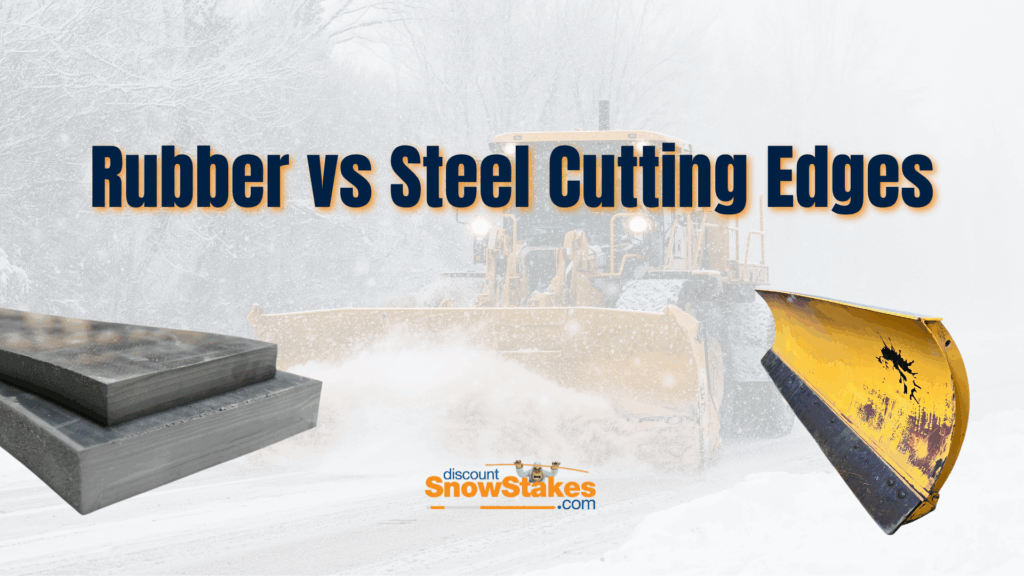
Choosing the right snow plow cutting edge can significantly impact your efficiency, equipment wear, and overall job quality. Contractors often debate rubber vs steel snow plow cutting edges because each option offers distinct advantages depending on the type of property, snowfall conditions, and operational goals.
Understanding the pros and cons of each helps you make the best decision for your snow removal operation.
What Is a Snow Plow Cutting Edge?
The cutting edge is the bottom portion of a plow blade that makes direct contact with the pavement. It is responsible for scraping snow and ice from the surface. Because it absorbs constant friction and impact, selecting the right material matters for performance and durability.
The two most common options are steel cutting edges and rubber cutting edges.
Steel Snow Plow Cutting Edges
Steel cutting edges are widely used in commercial snow removal due to their strength and scraping ability.
Pros of Steel Cutting Edges
- Superior scraping power on compacted snow and ice
- Long-lasting under heavy commercial use
- Better performance in high-traffic parking lots and roadways
- Ideal for layered storms and packed snow conditions
Steel edges are aggressive and effective when you need to remove stubborn snow and ice buildup.
Cons of Steel Cutting Edges
- Can cause surface damage on decorative concrete or pavers
- Louder operation compared to rubber
- Increased risk of catching uneven pavement or raised obstacles
Steel cutting edges work best on durable surfaces such as asphalt roads, large parking lots, and municipal routes.
Rubber Snow Plow Cutting Edges
Rubber cutting edges provide a more forgiving and surface-friendly option.
Pros of Rubber Cutting Edges
- Reduced risk of surface damage
- Quieter operation
- Better for decorative surfaces and sensitive pavement
- Flexible material conforms to uneven surfaces
Rubber edges are often preferred for residential driveways, stamped concrete, and properties where surface protection is a priority.
Cons of Rubber Cutting Edges
- Less effective at scraping compacted ice
- May wear faster in heavy commercial applications
- Can leave a thin layer of packed snow behind
Rubber edges excel in light to moderate snowfall but may struggle during severe storms or heavy accumulation.
Which Option Is Right for You?
The best choice depends on your specific workload. Contractors servicing large commercial lots and roadways often prefer steel cutting edges for maximum scraping power. Those handling residential driveways or decorative surfaces may benefit from rubber edges to reduce damage risk.
Some contractors even keep both options available depending on the route or property type.
Final Thoughts
When comparing rubber vs steel snow plow cutting edges, there is no one-size-fits-all answer. Steel provides durability and aggressive scraping, while rubber offers surface protection and quieter operation. Evaluating your route types, snowfall patterns, and client expectations will help determine which cutting edge supports your long-term efficiency and profitability.
Making the right choice can reduce equipment wear, improve results, and help maintain customer satisfaction all winter long.